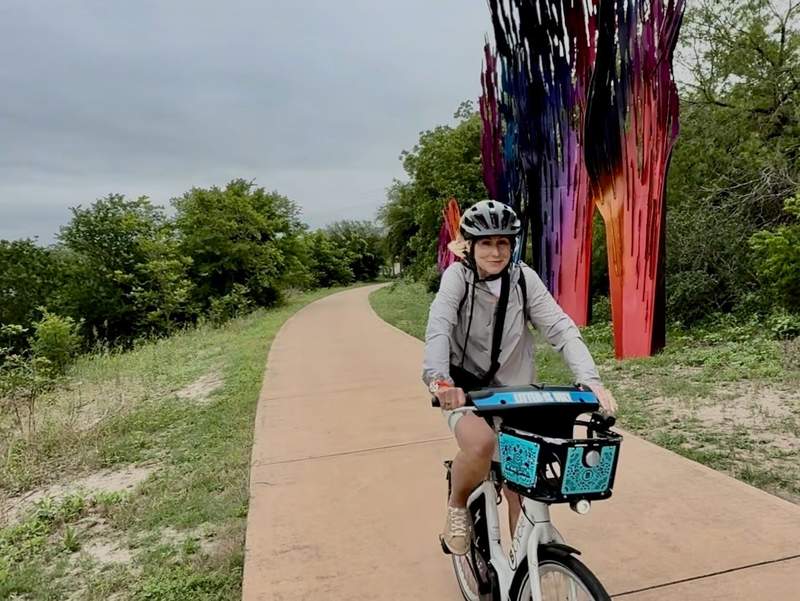
My husband and I didn’t expect a bike ride to define our San Antonio trip, but it did. At Mission San José, we joined a guided Mission Trail Bike Tour and began following the river. The city revealed itself from the bike path. Everything felt slower, more present. As we rode, the landscape shifted and the river led the way. What started as a bike ride quickly became something larger: a journey through a UNESCO World Heritage Site.
What to Know Before You Ride the Mission Trail
- The Mission Trail is one of the only UNESCO World Heritage Sites in the United States that you can explore entirely by bike.
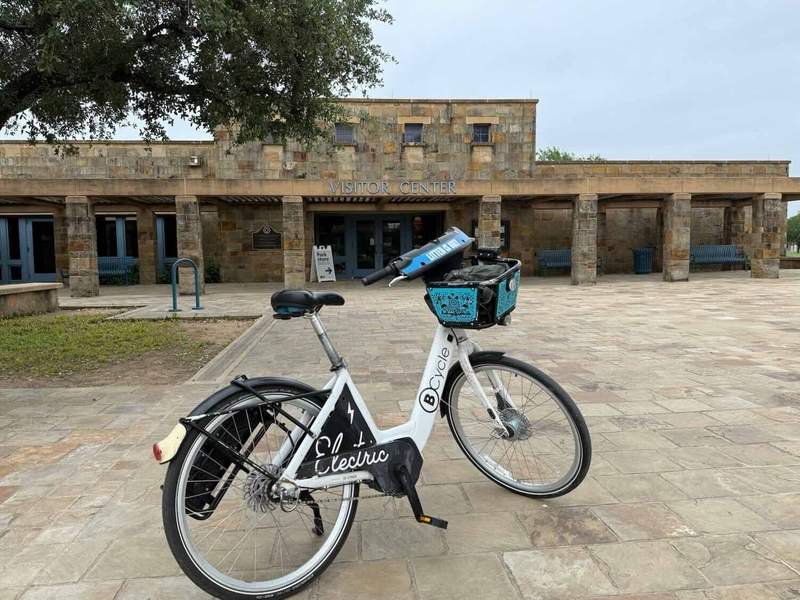
- San Antonio’s BCycle e-bikes make the mostly flat route accessible even for casual or beginner riders.
- A guided tour adds historical context and storytelling that transforms the missions from beautiful landmarks into a connected cultural experience.
Editor’s Note: The writer was partially hosted.
Why the San Antonio Missions Are a UNESCO World Heritage Site You Can Ride
The San Antonio Missions are part of San Antonio Missions National Historical Park and a UNESCO World Heritage Site. Inscribed in 2015, it is one of only 26 UNESCO World Heritage Sites in the United States and the only one in Texas.
Unlike most UNESCO sites, this one stretches along a river corridor rather than occupying a single location. You move through it rather than arrive at it.
What to know about the San Antonio Missions:
- Part of San Antonio Missions National Historical Park
- UNESCO World Heritage Site designated in 2015
- One of only 26 UNESCO sites in the United States
- Connected along a continuous river corridor designed for biking access
A few pedals in, the traffic noise dropped off and it was mostly just us and the river.
Are you ready to explore off the beaten path? Let us inspire you!
How to Explore the Missions by BCycle E-Bike
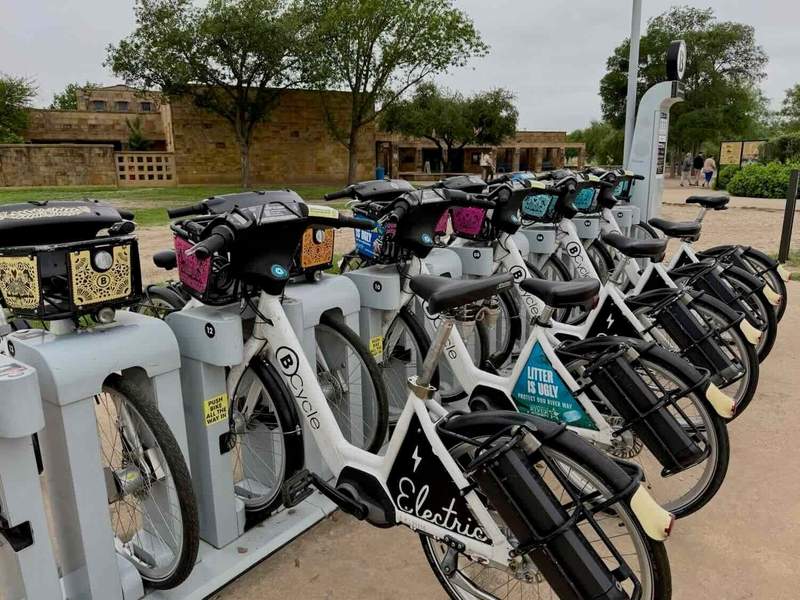
San Antonio’s BCycle system makes the Mission Trail easy to explore independently. Docking stations are located throughout downtown and near each mission, allowing flexible, point-to-point riding. Day passes typically run around $12 to $15 and allow unlimited short rides as long as you dock between stops.
Guide Teresa Scheets explained it simply: “BCycle San Antonio is a rideshare system with docking stations all over downtown and out at the missions. You pedal, you check the bike in and you go explore.”
Under the trees, it felt different. Cooler. Quieter. Light coming through in pieces. For that stretch, the city was gone. Just the bikes and the river alongside us.
Guided vs. Self-Guided Mission Trail Bike Tours
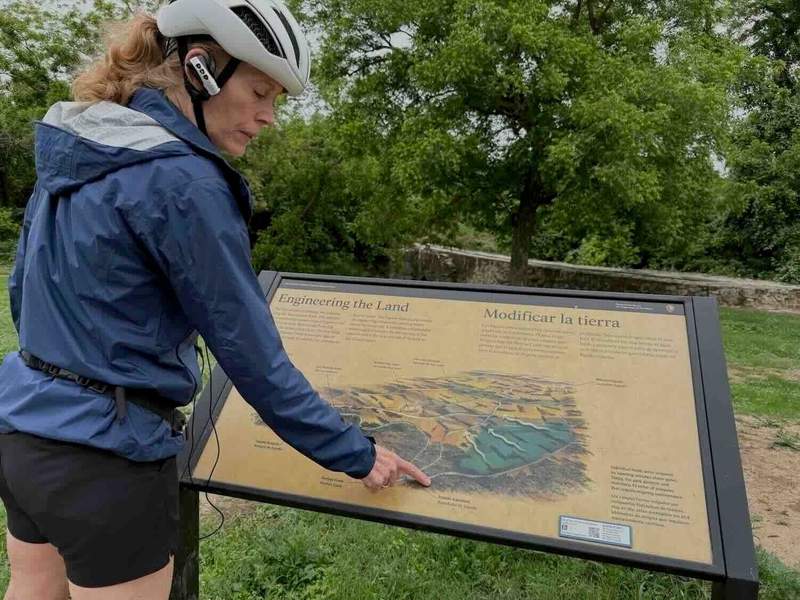
Riding with a guide shifted everything for us. On this tour, we rode with Teresa Scheets of T’s Tours. On our own, we would have seen beautiful old structures. With Teresa, the stories started to fill in.
At Mission San José, she explained how the mission system worked day to day and what that meant for the communities living here. She gave the history weight.
There is no single way to experience the Mission Trail. A guided tour adds storytelling that connects each mission into a larger narrative, while a self-guided BCycle ride offers flexibility and the freedom to move at your own pace.
As Teresa said, “It is not just about riding. It is about understanding what you are seeing along the way.” She also placed the city in a broader context: “San Antonio is so much more than the Alamo. Our UNESCO designations have put our history, food and culture on the world stage.”
Mission San José: The Heart of the Missions
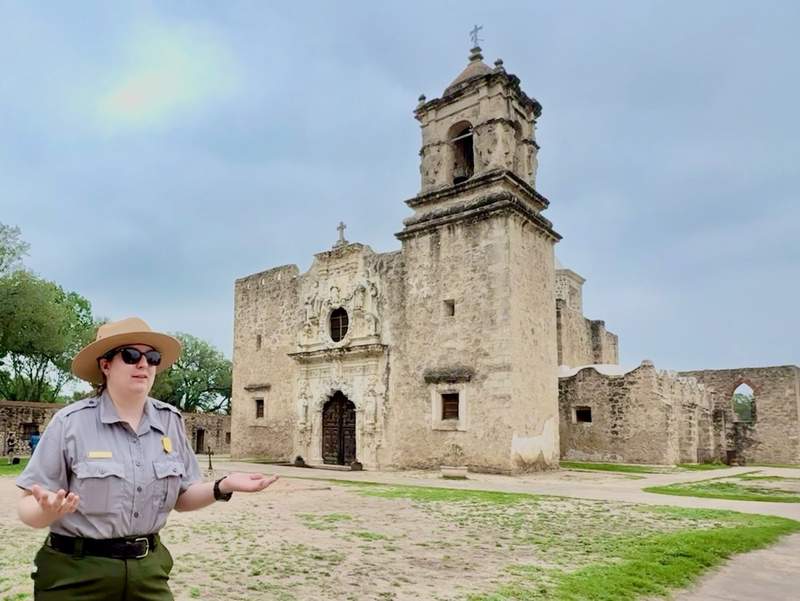
Walking into Mission San José, I wasn’t expecting it to feel this intact. The layout still makes sense. The church, granary and living areas all sit within the walls, making it easy to picture how the mission functioned.
Much of what remains reflects a 1930s restoration, which helps visitors understand how the community operated, even if it adds layers of reconstruction.
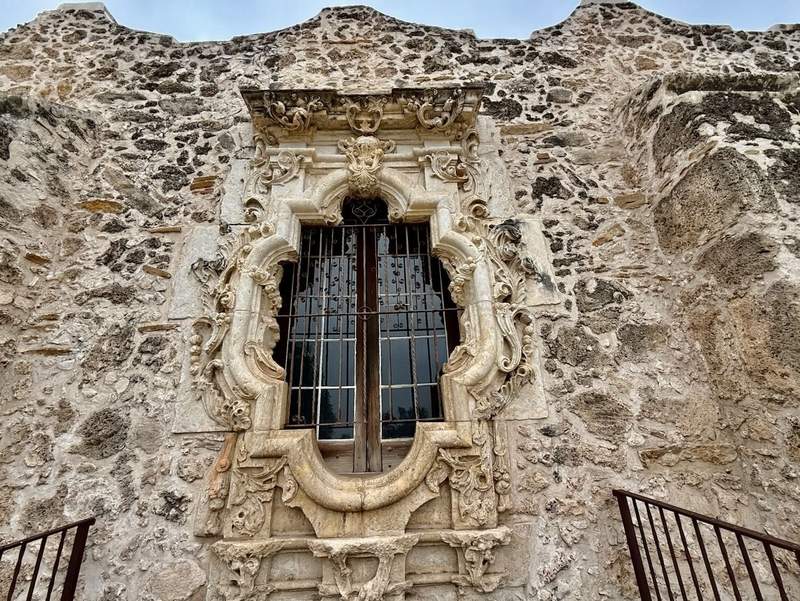
Inside the courtyard, the sound changes. Footsteps echo slightly off stone. The Rose Window stands out once you know where to look, carved into the exterior with remarkable detail.
Mission San Juan: River Views, Aqueducts and Quiet Trails
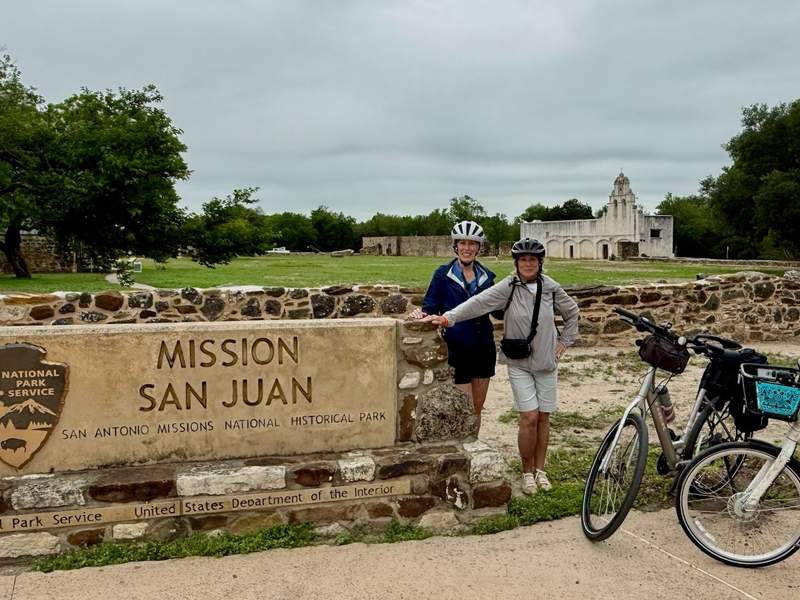
San Juan shifts the experience immediately. It feels more open, less built up, and more connected to the landscape than the structure itself. This was the agricultural center of the mission system, and the land still reflects that purpose.
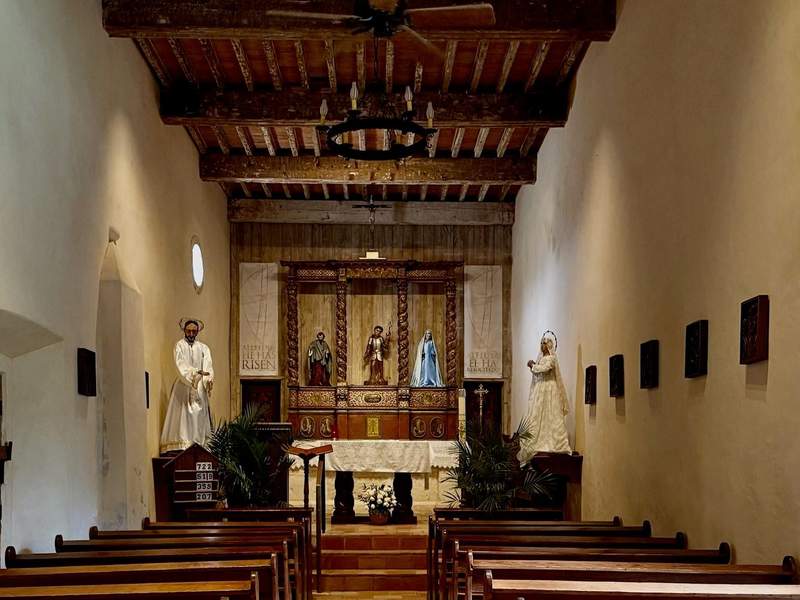
Birdsong starts to take over here. The river stays close, sometimes out of sight, but you can feel it.
A shaded trail runs alongside it, cooler under the trees, and just past the mission the old aqueduct is still there, easy to miss if you’re not looking for it.
Mission Espada: The Oldest and Most Peaceful Mission
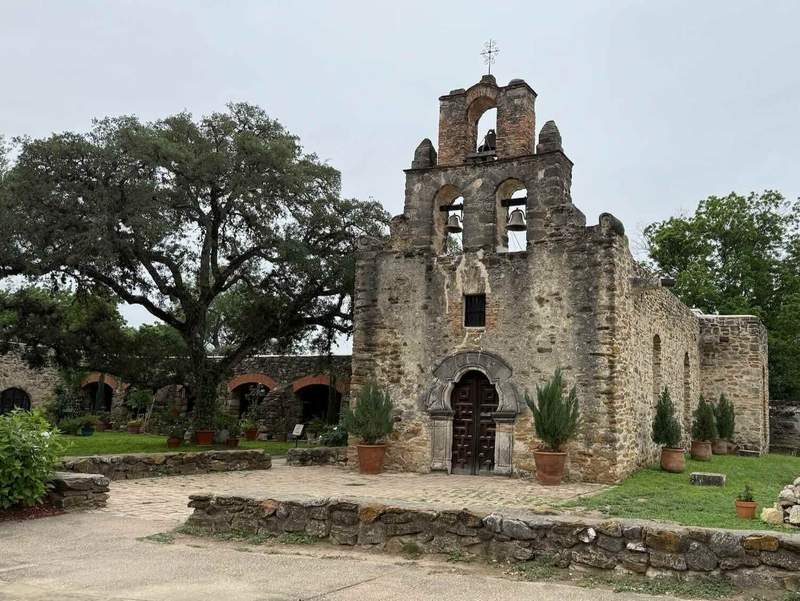
Mission Espada is the oldest of the San Antonio missions and the most understated. It feels less restored and more continuous with the present.
The church is still active today, which changes the atmosphere. Not a preserved site removed from life. It is still part of it.
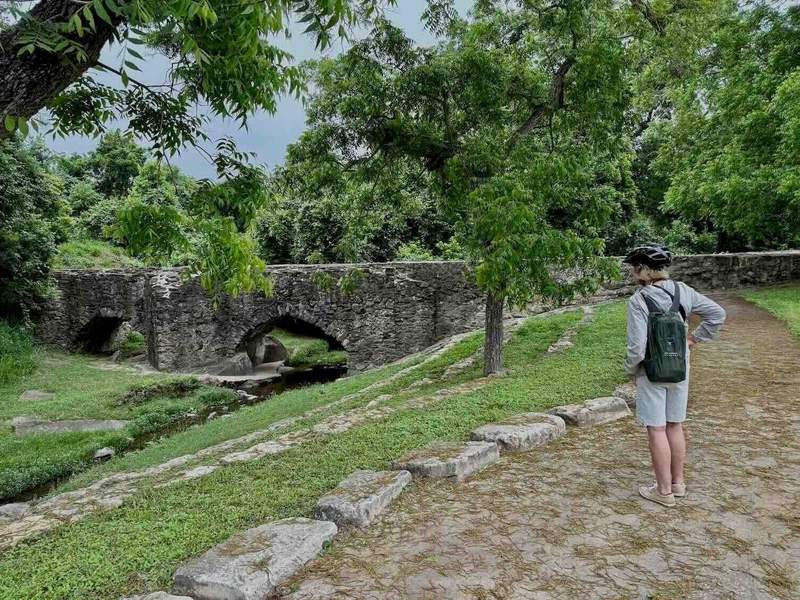
The Espada Aqueduct sits just beyond the mission. It feels like it belongs to the landscape rather than the visitor path.
There is a quiet simplicity here that lingers after you leave.
Public Art Along the Mission Trail
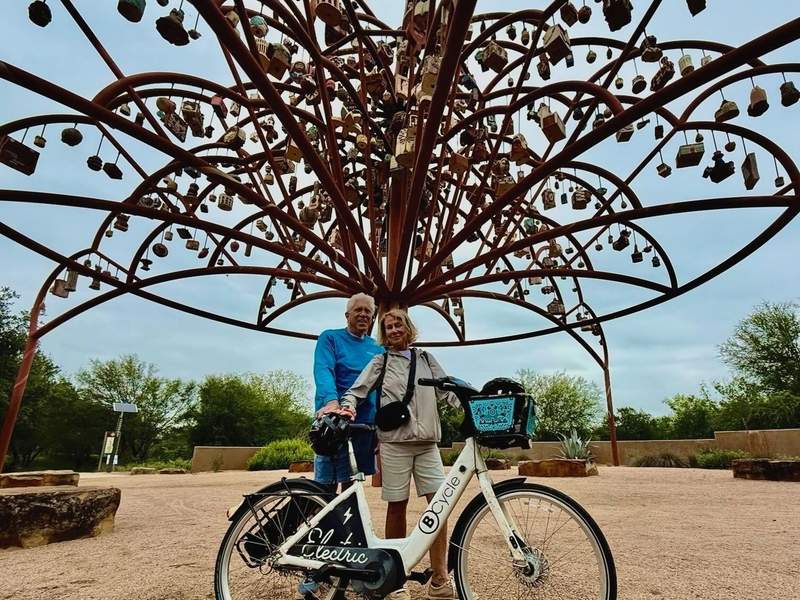
Public art is woven throughout the Mission Reach section of the San Antonio River Walk, connecting landscape, history and river ecosystem. “ Whispers,” created by Belgian artist Arne Quinze, features sweeping steel forms that echo native trees and wildflowers along the trail.
Nearby, Árbol de la Vida: Memorias y Voces de la Tierra tells community stories through hundreds of ceramic pieces suspended in a steel “tree” near Mission Espada.
If You Go:
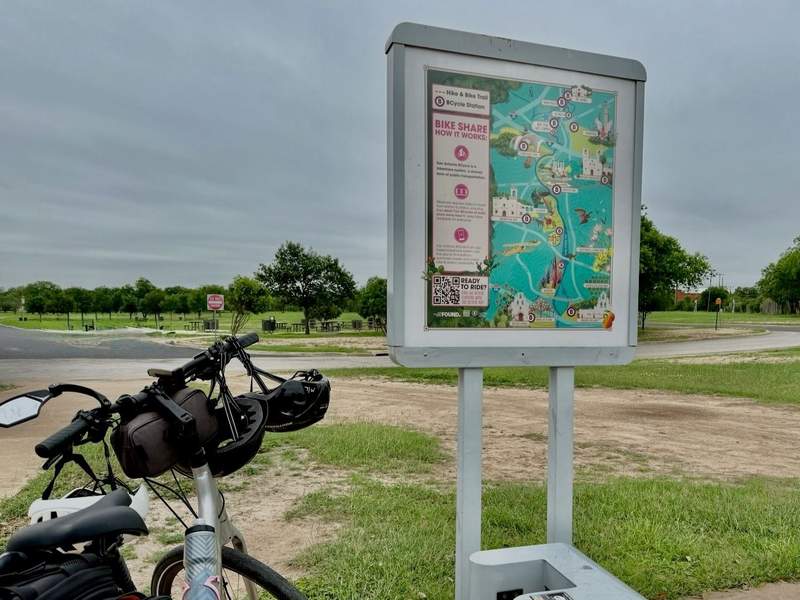
- Start at Mission San José for bike rentals and visitor access.
- Bring water, sunscreen and comfortable clothing for riding between missions.
- Plan extra time for Mission San José and the Espada Aqueduct.
- Consider an early morning ride for cooler temperatures.
FAQ: Biking the San Antonio Missions
There are five missions in San Antonio, but four are part of the San Antonio Missions National Historical Park along the river corridor. The Alamo is located separately in downtown San Antonio.
No. The route is mostly flat and beginner friendly, especially with e-bike assistance.
Most visitors spend about four hours completing the route, depending on how long they stop.
A guided tour adds historical context and storytelling that connects the missions into a larger narrative. However, you can also explore independently, with QR codes along the trail offering optional audio stories at key stops.
Related Reads